
For five decades, architect Bert Bender has helped shape the preservation of Florida’s historic places while championing the philosophy that saving old buildings is one of the most sustainable forms of architecture.
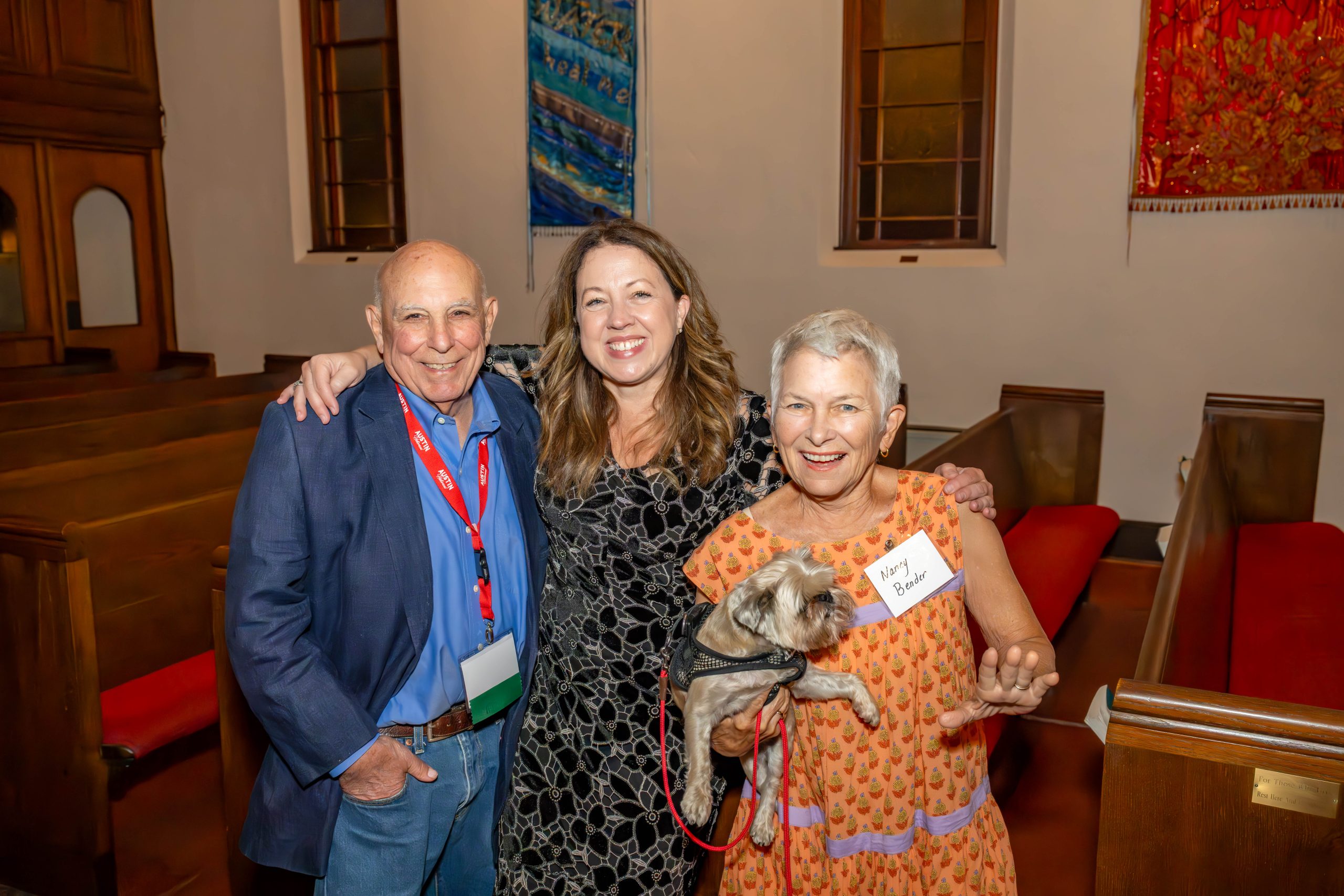
His career, spanning 51 years and 500 projects, reflects a lifelong commitment to excellence in historic preservation.
Bender’s relationship with the Florida Trust for Historic Preservation began shortly after relocating his architectural practice from Flagstaff, Arizona, to Key West in 1985 when he formed Benders & Associates Architects. He joined the Florida Trust Board of Directors the following year, serving for six years before rejoining the board in 2013. Bender chaired the Easement Committee and remains an active participant in the organization’s annual Preserve Florida educational conferences. He became a Trustee Emeritus in 2022 as a trusted advisor to the organization.
“The world would be a better place if there was a Bert Bender in every community,” said Rick Gonzalez, architect and fellow Trustee Emeritus. “We need architects like Bert who is willing to act — to say what is correct, then do so, standing by his opinion. We need this now more than ever when historic preservation is under threat.”
When asked what inspired him to become an architect, Bender begins with his family’s remarkable story.
His father arrived in America in 1921 as a 14-year-old orphan after losing both parents in Russia. Although his father wanted to become a shoemaker, a profession that would allow him to transform raw materials into something meaningful, he instead found work in a factory before eventually becoming a plumber and entering the construction industry. Bender’s mother is a first-generation American whose family came from the same small Russian town.
Born in Chicago in 1947, Bender grew up surrounded by people who worked with their hands in the trades. His parents encouraged him to attend college, and he enrolled in the University of Illinois at Urbana-Champaign to study architecture, believing the education would make him a better carpenter.
Instead, architecture became his life’s work.
After earning his professional degree, Bender traveled west to intern with visionary architect Paolo Soleri, working both in Soleri’s Scottsdale design studio and at Arcosanti, the experimental prototype city rising from Arizona’s high desert.
Reflecting on that pivotal decision, Bender simply said, “Life is all a matter of the choices you make.”
More than five decades later, Bender continues to practice architecture, often taking on historic preservation work pro bono, just as he did at the beginning of his career when the preservation movement was still gaining traction.
Beginning January 1, 2027, he will transition into a consulting role with Bender & Associates Architects. Although he received offers over the years to sell the firm, he waited until he found principals who would uphold the firm’s reputation and philosophy.
“You build your reputation on the kind of work you do,” Bender said.
Historic preservation became the cornerstone of that reputation. Looking back today, he finds it remarkable to have built something unique coming from nothing. Even five years ago, he reflects, he didn’t have this perspective on the span of his career.
Choosing a favorite project isn’t easy.
Among the most significant is the restoration of the Key West Custom House Museum, one of Florida’s finest examples of Richardsonian Romanesque architecture, distinguished by its red brick masonry, monumental columns and graceful arches.
Originally, only three firms had been invited to compete for the project before officials expanded the search to include a fourth, giving Bender the opportunity to submit a fifth proposal. Having already restored the Key West Lighthouse and established himself as an early advocate for historic preservation, Bender won what became a nine-year restoration effort.
Other milestone projects include the restoration of the Key West Lighthouse and the award-winning Key West City Hall, a $17 million project that was certified the highest-level LEED Platinum. Bender humbly said the project was well received by both the City of Key West and the Monroe County School District.
When Bender arrived in Key West in 1985, he expected to find a community committed to historic preservation. Instead, he discovered that many historic buildings were simply being renovated into something else, often without regard for preservation.
Each project became another opportunity to learn.
“I always wanted to leave each project as good as it could be,” he said.
That dedication gradually built both his expertise and his reputation, leading clients to seek him out for increasingly challenging preservation projects.
Bender’s historic preservation philosophy centers on a significant concept: to work on a building with a sustainable approach. “You are giving an old building a new use,” Bender said. “That is a great gift to people.” Fifty years ago, this was not a popular idea in the architecture profession.
Bender describes excellence in preservation using a simple analogy.
“You can draw a red line on a piece of paper,” he says. “Perhaps 10 to 20 percent of architects excel at historic preservation, they’re above that line. Those below the line don’t have the ability to deliver.”
Experience matters. “There’s something to be said for completing 500 projects.”
Now approaching his 79th birthday, Bender views his career through a different lens than he did earlier in life. What once seemed like simply doing the work has become something larger, a legacy.
Throughout his career, Bender and Bender & Associates Architects have received more than 100 awards recognizing excellence in design, preservation and public service, including multiple awards from the Florida Trust, the most prestigious awards granted in the state. Producing the highest-quality restoration possible not only preserves important places, Bender believes, it makes an impact on those who work with you. Getting the job done as good as it gets advances historic preservation.
He is leaving a legacy as a lesson for those architects on the red line.
Have any other news you’d like shared during our monthly new roundups? Email Larry Crumbie at lcrumbie@floridatrust.org to get your news featured!
Have any other statewide preservation news you’d love to see shared? Email Larry Crumbie at lcrumbie@floridatrust.org today!